
When collecting flying beetles, we mainly use a number of specialized tools described below. The basic tools are in this case a useful supplement to help us in the selection of captured individuals (exhaustor, tweezers).
Tools for active collection methods
Entomological net
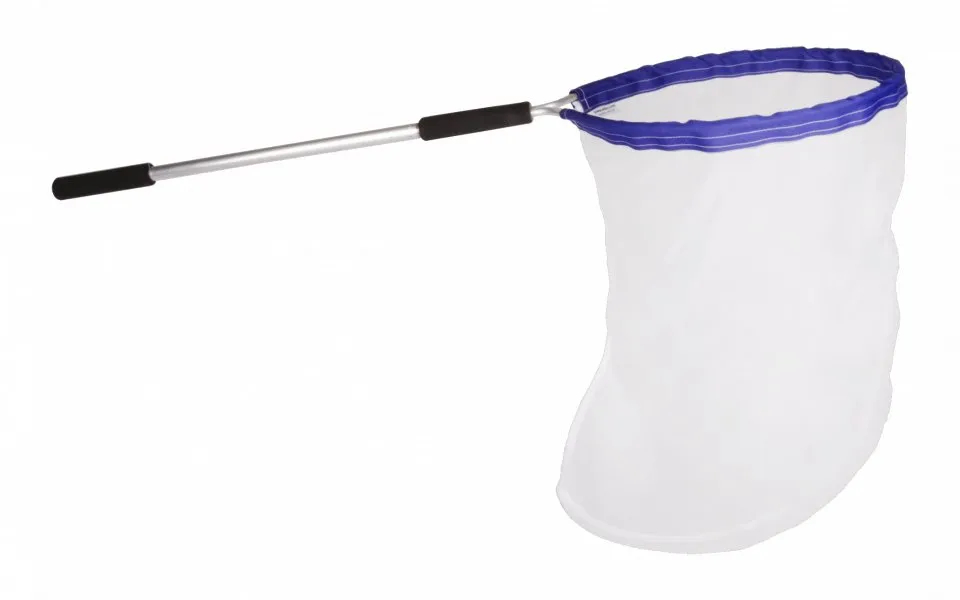
The only such tool for flying beetles is the classic entomological net or also called butterfly net. It consists of a monofilament net attached to a frame that is usually circular in shape. The diameter of the entomological net is usually in the range of 20-65 cm, and its length is 1.7-2 times the diameter (up to 2.4 times in the case of extended versions). The frames of entomological nets are usually rigid or foldable and are made of steel tubes or, as a lightweight version, of duralumin. The bars for these nets can be either fixed length or foldable, most often telescopic. They are available in lengths from 50 cm to 5 m. The longest ones are designed for fishing at higher altitudes. Folding poles are usually made of laminate or duralumin.
Entomological nets are used to sweep flying insects over vegetation or around branches of bushes and trees. Due to the fact that we use the net to catch insects in flight, we prefer nets with a diameter of 20-30 cm, as they allow us to make more agile movements. The net must be moved constantly, preferably by tracing the shape of a lying figure eight. This is the only way to ensure that the insects caught in the net do not fly away again. When hunting, be careful not to catch the net in the vegetation. Remember that the entomological net does not have a protective bag like a dip net and can therefore easily tear on caught thorns or branches.
When hunting for beetles, the function of the entomological net is usually easily replaced by the more commonly used fly net.
| Video frame: Entomological net |
| Video frame: Differences between working with entomological nets and a dip net |
Tools for passive collection methods
Passive methods of collecting flying beetles include mainly Moericke traps, windowpane and tree traps, Malaise traps and light traps.
Moericke traps
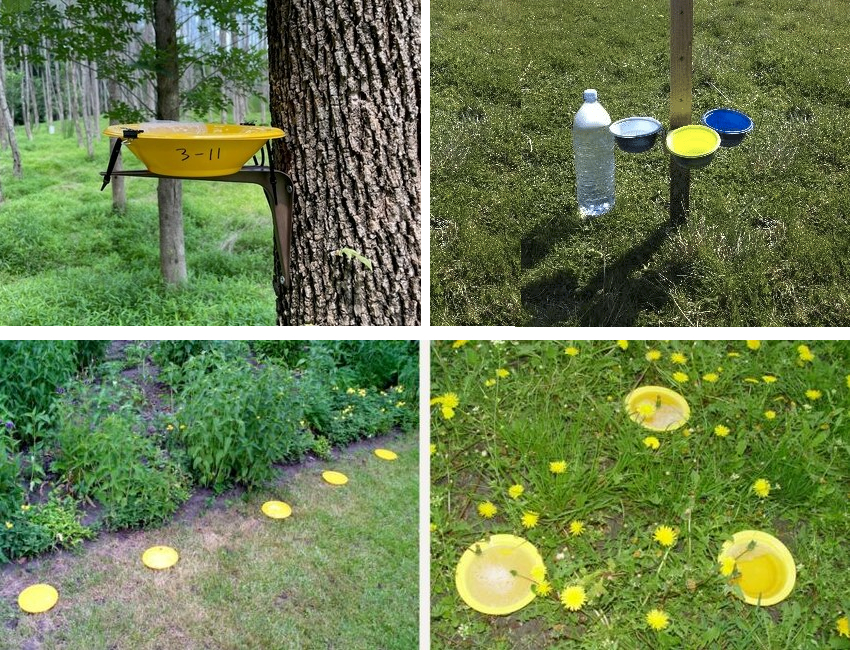 Moericke traps, sometimes called yellow pan traps, are plastic trays of various diameters and colours attractive to insects. Yellow, white and blue colours, or a combination of these colours (e.g. a white bowl with a yellow centre) attract insects the most. The bowls can either be ordered from specialist shops (which is quite expensive) or made at home. You can use, for example, pot bowls, flying saucers or polypropylene soup bowls.
Fill the bowls with a concentrated solution of table salt (or just water) with a little wetting agent (e.g. dishwashing liquid) and place them in an open area (e.g. a meadow) at the level of the surrounding vegetation. They can either be placed directly on the ground or placed higher up on stands (pole and bowl), or they can be hung from the lower branches of trees.
Windowpane trap
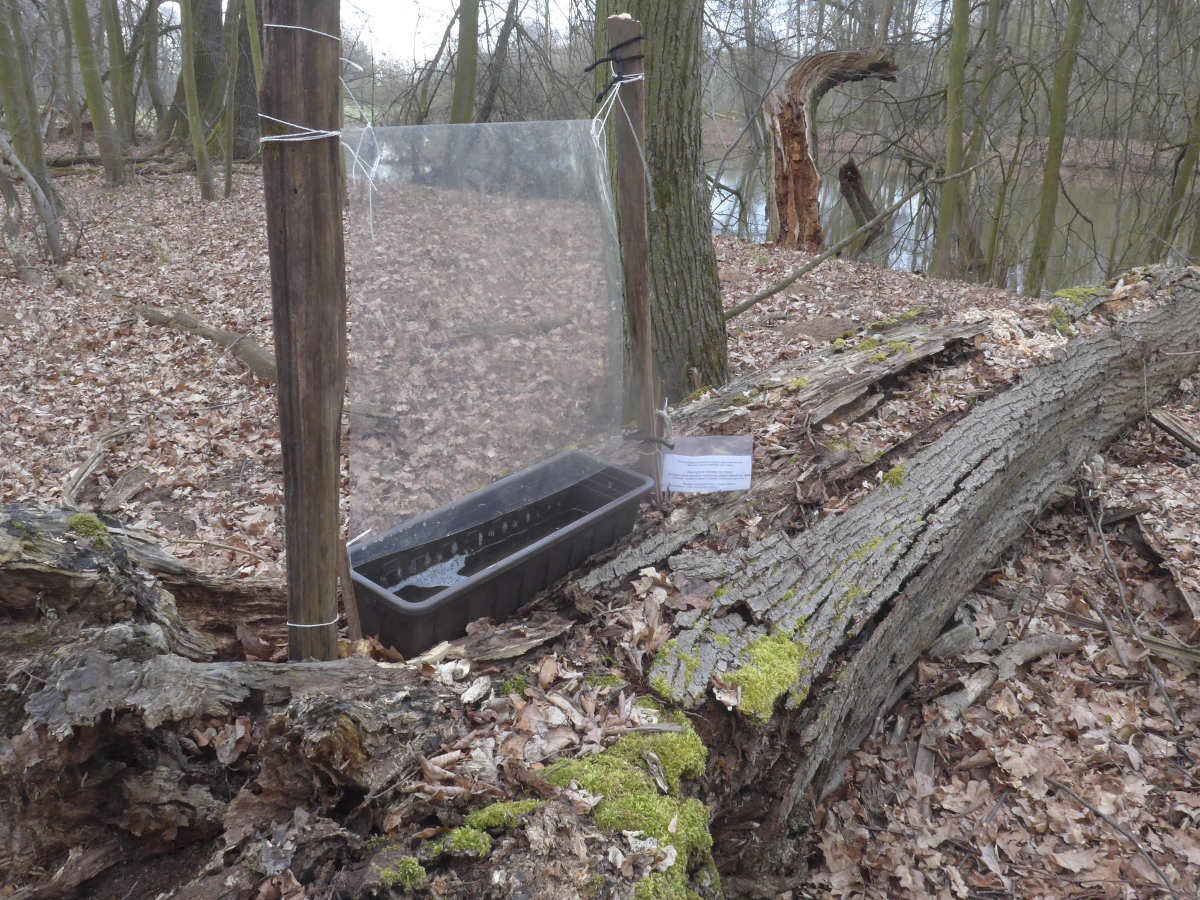
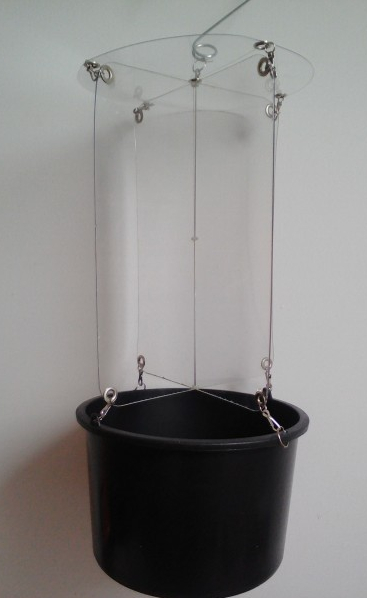
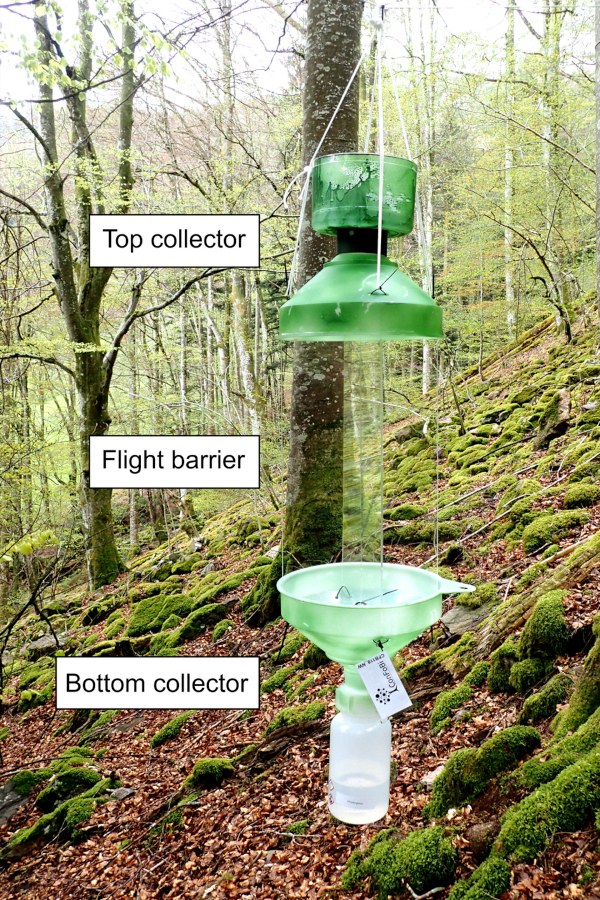
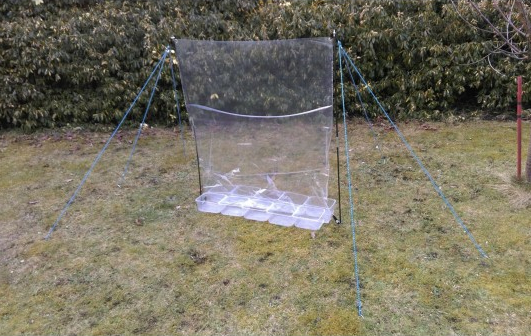 A windowpane trap (or flight interception trap or barrier trap) is essentially a plate of transparent material placed in the area of an insect's likely flight corridor. Underneath the plate are containers of fixative fluid designed to catch falling insects. Flying insects hit the transparent plate and fall into the fixative fluid container.
Various plastic sheets (plexiglass, thin durofol, etc.) are used for the transparent plates; in an emergency, shrink wrap stretched between two trees will also serve us well. Retention boards are placed in a space from about 50 cm above the ground to about 150-180 cm. Their size varies. The larger the area of the board, the greater the probability of catching flying insects. The construction of the plate is either rectangular or two smaller plates are used, joined in a cross. Impact traps of the cross design can catch insects flying from 4 directions, while rectangular designs allow catching only from 2 directions.
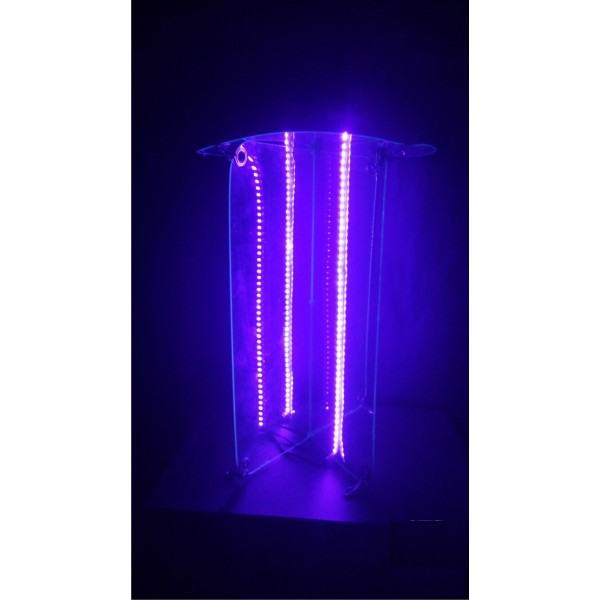
The fixing fluid is usually water with a wetting agent (e.g. dishwashing liquid). If the impact trap cannot be checked at short intervals (max. every 48 hours), it is preferable to use a saturated solution of table salt or diluted ethylene glycol as the fixative fluid. To increase retention, the impact trap can be equipped with a UV light to serve as an attractant.
Tree trap
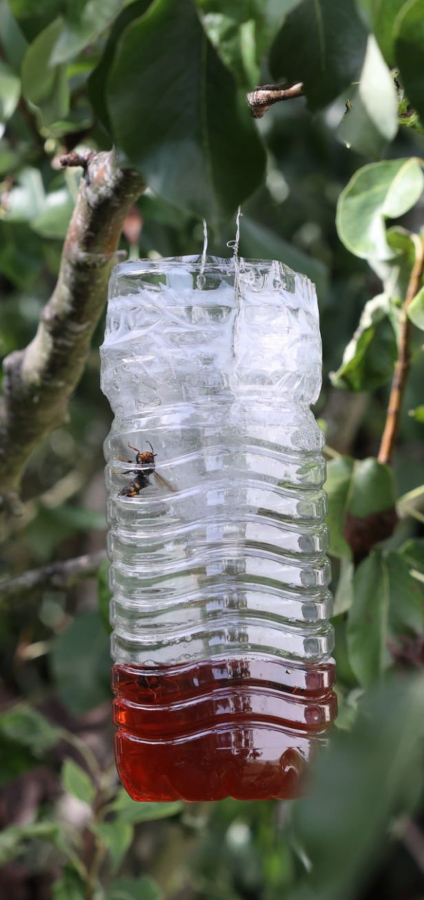
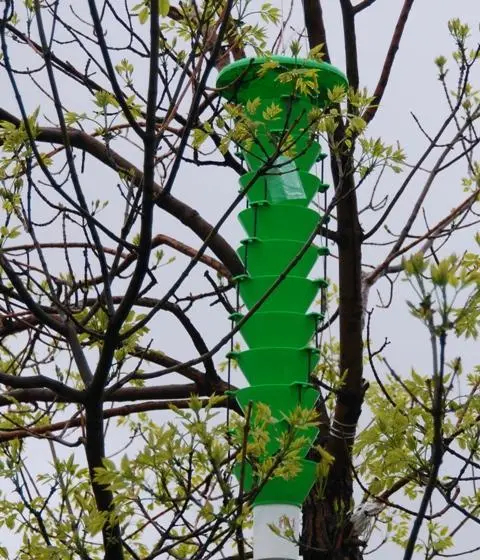 The tree trap is another tool used for catching flying insects. Many flying insects spend all or most of their time flying in the higher levels and canopy of trees. Tree traps are designed to catch these types of flying insects.
There are a variety of tree trap designs. For example, they may consist of a plastic bottle with a cut-off top and a neck. This top part is turned and inserted into the bottom part so that the neck faces the bottom of the bottle. It actually forms a funnel that allows the beetles to enter the bottle. They will find it very difficult to find their way out. In order to allow the beetles to climb even on the smooth walls of the bottle, a thin fabric (e.g. from old women's tights) is placed on the bottle.
A lightly rolled white wine with a wetting agent is often used as an attractant and fixing fluid in one. However, there are many recipes for the attractant in these traps and every experienced entomologist uses "his guaranteed recipe".
An important prerequisite for a working tree trap is its placement on the tree. It must be placed high enough to catch insects flying in the higher levels of the tree or in the canopy. This is done either by using a sufficiently long pole (usually a telescopic pole, up to 8 m long) or by shooting a hanging rope/rope into the upper levels of the tree.
| Video: Tree traps |
Malaise's trap
The Malaise trap is a sophisticated tool used to catch flying insects. However, it is used more for trapping other orders of insects and is not as effective for beetles. For this reason, I will not discuss its construction or method of use here. I recommend that interested parties study the available literature.
Light trap
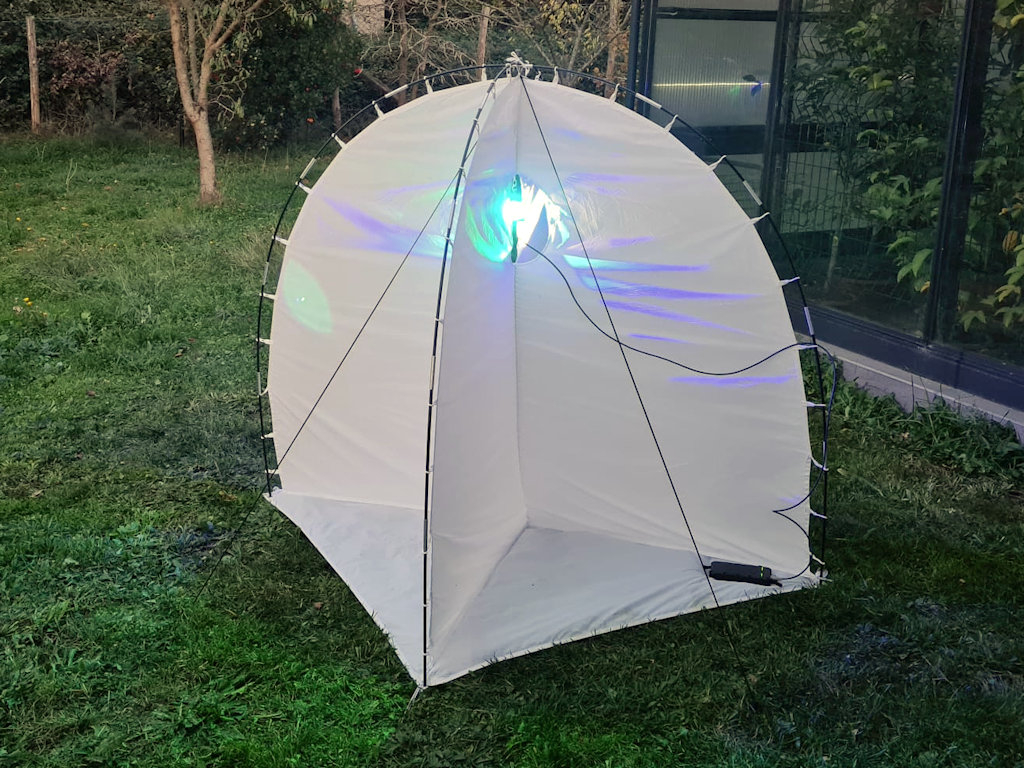
The light trap is the last tool we will use to close the chapter on collecting flying bugs. Light trapping is an old method based on the insect's strong affinity for light of a certain wavelength.
The basis of a light trap is a suspended white canvas on which a light source is directed. Various synthetic fabrics are now used as white cloths, which reflect light rays more and dry more quickly when wet (showers, dew). The canvas can be larger, rectangular or slightly smaller, arranged in a cross.
The light source should be of sufficient power and emit a certain proportion of UV radiation (wavelength 100 to 400 nm), which is most attractive to insects. Various lamps, bulbs or LED strips are used. The wattage should be selected according to the available power source. If we install the light trap within easy reach of the mains, we can afford to use a more powerful light source. If we are dependent on the use of a battery, we must adjust the power of the lighting accordingly. We then do not install the lower wattage light sources in an open area, but somewhere in the meadow-forest interface, so that the forest is as free of moonlight or ambient light smog as possible.
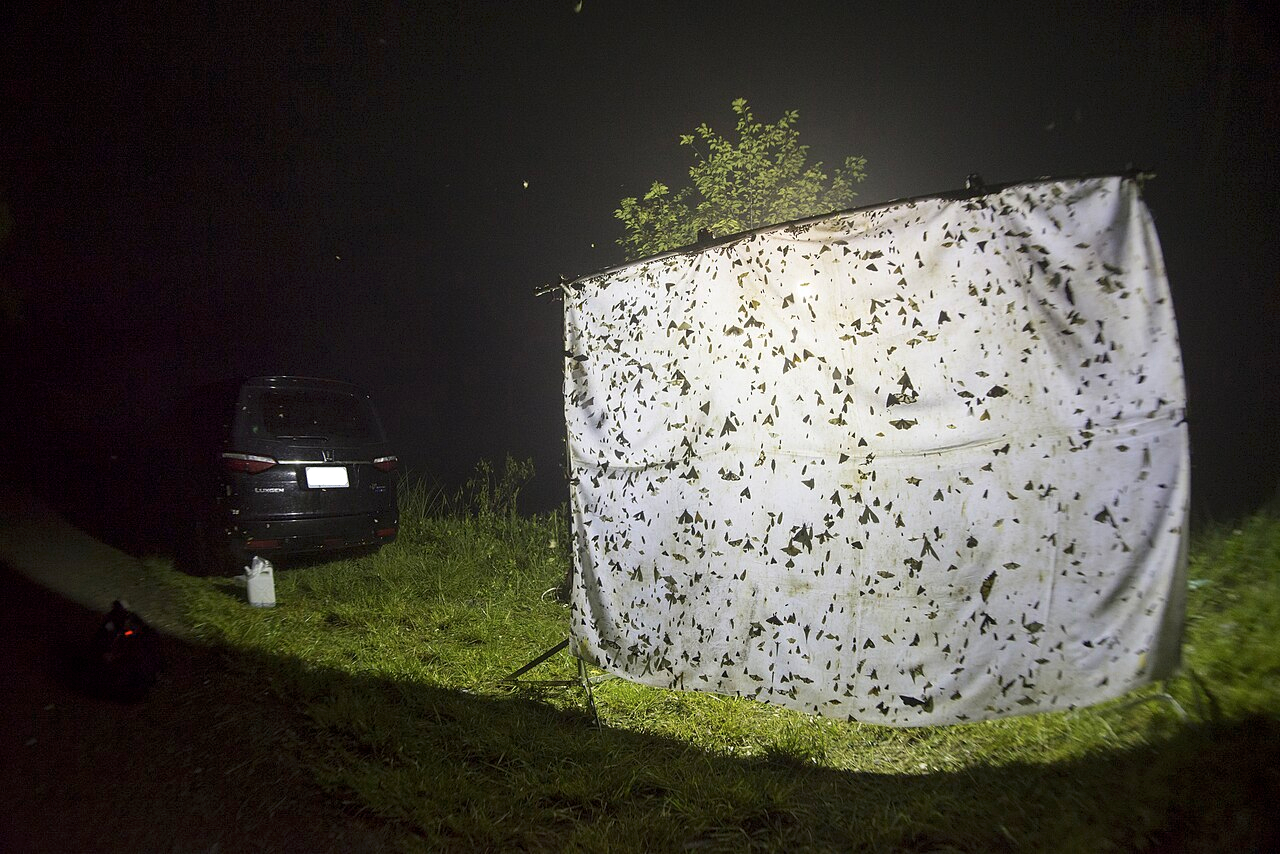
The effectiveness of the light trap depends on these factors:
- the light source used (higher power and a higher proportion of UV radiation gives better results)
- air temperature (at temperatures below 15°C the beetles stop flying)
- wind speed (best results are obtained when there is no wind)
- moon phase (best results when the moon is new)
- cloud cover (best results when the sky is cloudy to overcast)
