
Water beetles are not only beetles that live underwater or float on the water surface. We also include beetles that live on aquatic vegetation. When collecting, we use a few basic tools (tweezers, exhaustor) as well as a number of specialized tools described below.
We catch aquatic beetles in either flowing or stagnant waters. In flowing waters we distinguish between the size of the flow, depth and amount of aquatic vegetation. We select the appropriate tools accordingly. Water traps are usually unsuitable in flowing waters, except in places where the flow is very slow (e.g. in the bay). Even then, the water trap must be secured very well. In the case of still waters, the size of the water surface, the bottom material (mud, sand, stone), the amount and type of aquatic vegetation and, last but not least, whether or not it is a breeding pond also play a role.
Tools for active collection methods
For active collection methods we use two basic tools for aquatic beetles: a water net and a sieve.
The Water Net
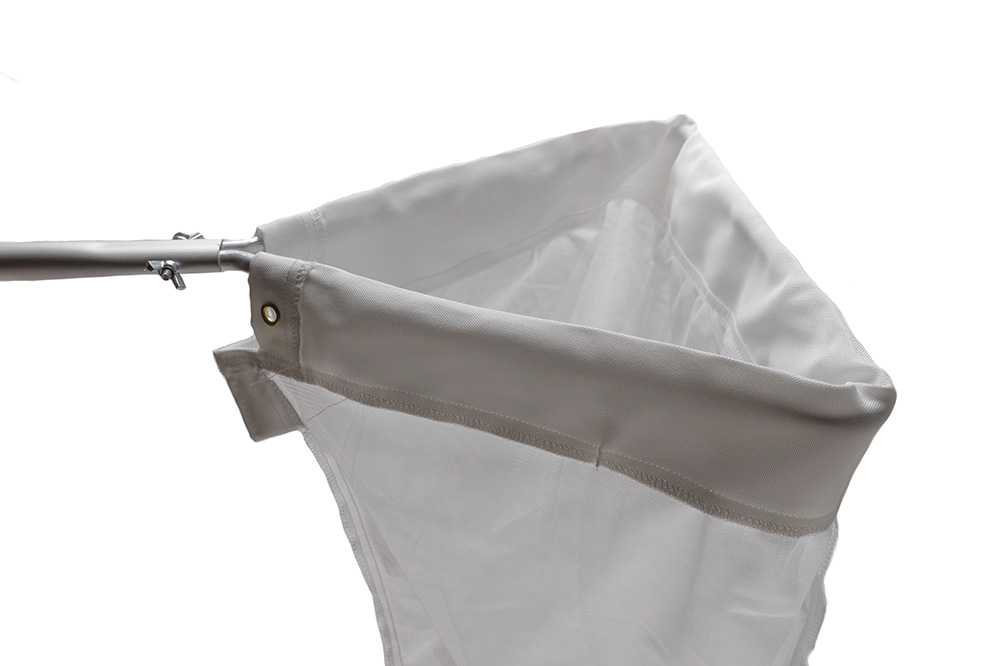

The water net is very similar in design to a dip net. It also consists of a translucent fabric, called uhelon, over which a protective sleeve of a stronger material such as dederon is placed. The shape of the water net is most often a semicircle or triangle. This is so that the net can rest on the bottom of the flowing water. The bottom is then raked in front of the net, and the water current carries the loose bugs directly into the net. The construction of a water net is also stronger because it has to overcome the resistance of the water, which is greater than the resistance of the air in the case of a dip net. And usually a stronger rod is used to guide the net through the water.
The method of fishing in still waters is similar to fishing with a dip net. We also move the net back and forth on the bottom (describing a lying figure of eight), while trying to "sweep" parts of the vegetation. I have described the method of fishing in flowing water in the previous paragraph.
We also use a water net to catch beetles that live on aquatic plants, either on parts of them below the surface or on plants just above the surface. In this case, we use the water net as a dipper.
Sieve
 A sieve is used in the same way as a water net. The difference is that the sieve has a shorter handle and thus allows faster movements underwater. We usually use the strainer in shallower waters to catch specific bugs we have discovered under the surface.
A fine mesh sieve purchased at a home improvement store will serve us well as a sieve.
When using a water net or sieve, we often scoop up quantities of mud and plant material from the bank or bottom of the water body being studied. Transfer these contents to a larger white dish or white waterproof tarp. Observe the movement of the insects and then pick them up with tweezers or an extractor, or process the contents later using hand collection or an eclector (see the section on Collecting of crawling beetles).
Tools for passive collection methods
The basic tool for passive methods of collecting water beetles is the water trap.
Water trap
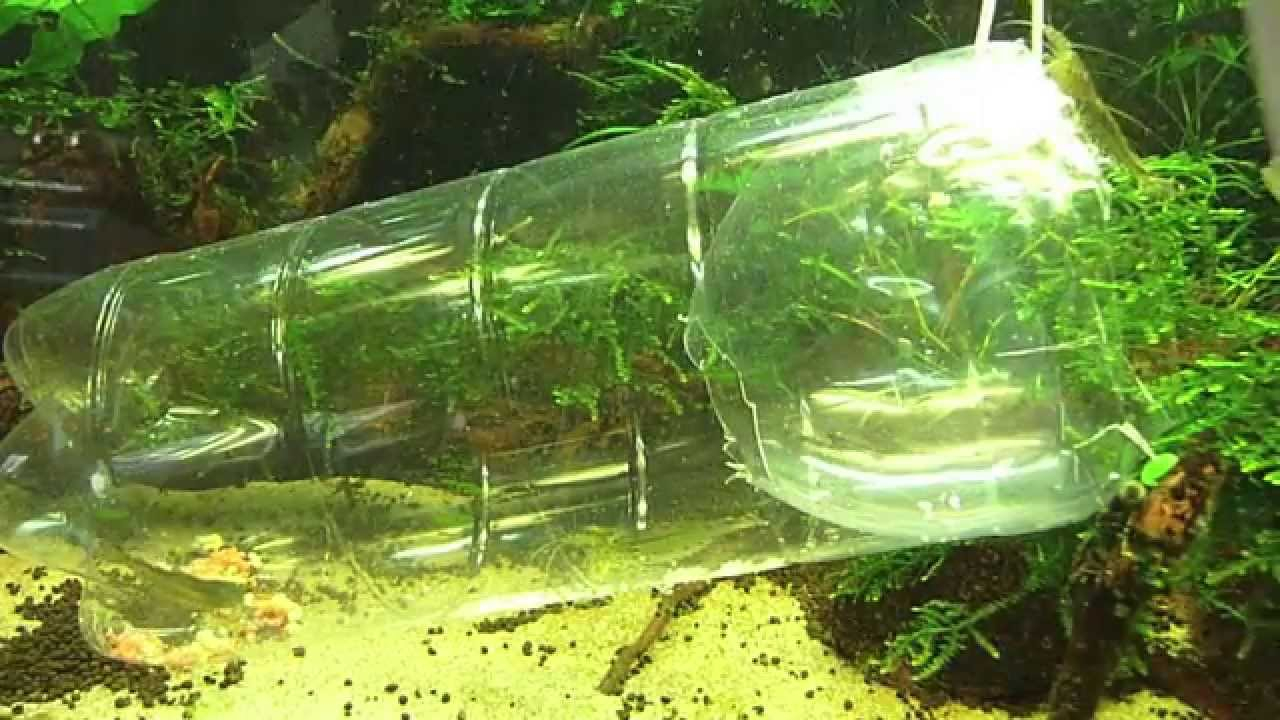

The water trap is in the form of a pot and is almost identical in design to the described construction of a log or tree trap. It consists of a plastic bottle that has a cut-off top with a neck. This top portion is turned and inserted into the bottom portion so that the neck faces the bottom of the bottle. It actually forms a funnel that allows the bugs to enter the bottle. They will find it very difficult to find their way out. The diameter of the funnel neck affects the size of the water beetles caught. Large divers and water beetles are very wide, and the neck of the water trap should be adjusted accordingly.
Dog pellets or chicken liver are most commonly used as an attractant in water traps. The attractant is placed in the water trap and filled with water. It is then submerged below the surface near the shore so that the mouth of the trap faces towards the shore where aquatic vegetation is present. The trap must be tied to prevent it from floating away.
A water trap may also be set as a live trap. In this case, it is necessary to leave an air bubble in the bottle, which serves as a breathing chamber for the trapped beetles. When using a live trap, a check every 24 hours is necessary, otherwise predation between the trapped individuals will occur.

Hungerford's UV light trap is an improved water trap that incorporates a UV lamp as an additional attractant. The trap consists of an opaque package with a funnel-shaped entrance. The UV light is designed to increase the interest of water beetles in the interior of this trap. Otherwise it works on the same principle as a classic water trap.
